










Making Friends in South America: Galápagos Islands Animals
Few places in the world capture the imagination quite like the Galápagos Islands. Teeming with wildlife found nowhere else on Earth, unusual creatures roam freely across rugged volcanic landscapes and thrive in the clear waters surrounding this stunning archipelago. You’ll find everything from giant tortoises roaming misty volcanic highlands to penguins darting through tropical waters.
If you’re dreaming of seeing Galápagos Islands’ animals up close, read on. This guide introduces the most iconic Galápagos species, the stories that shaped them and advice for unforgettable animal encounters. Delve deeper into this astonishing ecosystem with My Cruises Touring Collection for in depth discoveries led by local experts passionate about the region’s wildlife and conservation.
A living laboratory of evolution
A living laboratory of evolution
The Galápagos Island archipelago sits more than 900 kilometres off the coast of Ecuador, its isolation giving rise to wildlife that evolved entirely on its own terms. When Charles Darwin visited in 1835, he observed subtle variations between species that helped inspire the theory of evolution. That legacy lives on today.
Each island presents its own landscape, climate and food sources, and the animals have adapted in ways that are both fascinating and distinctly unique. Whether it’s the curved shells of highland tortoises or the varied beaks of Darwin’s Galápagos finches, every species tells a powerful story about the forces of nature.
One of the greatest surprises for travellers is just how relaxed and unbothered the wildlife is. Sea lions lounge on park benches, blue-footed boobies nest near walking paths and giant tortoises wander through grassy fields as if welcoming guests. While strict national park rules ensure these animals remain protected, the sense of closeness you feel in the Galápagos is unlike anywhere else on the planet.

Life under the surface
The waters surrounding the Galápagos Islands host an astonishing diversity of marine species. From shallow-water bays filled with sea turtles to deep channels patrolled by sharks, the marine world reveals an entirely new side to the archipelago. Rays glide silently along sandy channels, sea turtles drift through turquoise shallows and sea lions swirl through shoals of fish, creating dynamic underwater scenes that feel almost cinematic. Cool currents from the west and nutrient rich upwellings support wildlife that thrives in astonishing numbers.
Sharks, rays and underwater giants
The nutrient rich waters surrounding the islands attract a spectacular array of marine life. Reef sharks, hammerheads and even whale sharks frequent the region, particularly around the western islands where cold currents concentrate food sources. These sleek, graceful animals are commonly seen cruising around reefs and rocky outcrops, adding a sense of awe to guided snorkelling excursions.
The Galápagos shark, despite its name, is found all over the world, but was first discovered in the Galápagos Marine Reserve and is often seen at dive sights around the archipelago. The clear waters make it easy to appreciate their distinctive shape and confident movements while learning about the marine ecosystem that supports them.

Turtles of the Galápagos Islands
Sea turtles are among the most peaceful animals you’ll encounter in the Galápagos. Watching them glide effortlessly through turquoise waters or surface for a slow, steady breath is a highlight of any touring experience. These turtles are often seen around protected bays and sheltered reefs, where they drift between patches of seagrass or rest near sandy slopes.
Guided outings help you understand how these animals navigate long migratory journeys and how conservation efforts protect their nesting sites throughout the archipelago. For many travellers, the quiet beauty of observing sea turtles becomes one of the most memorable moments of the entire journey.

Galápagos marine iguanas
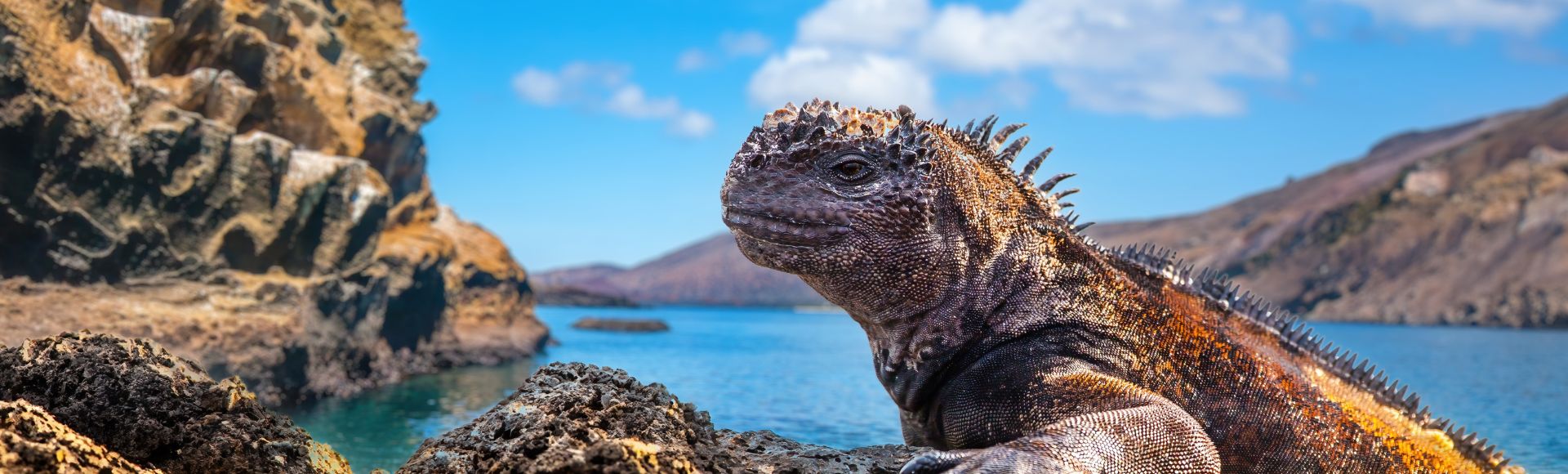
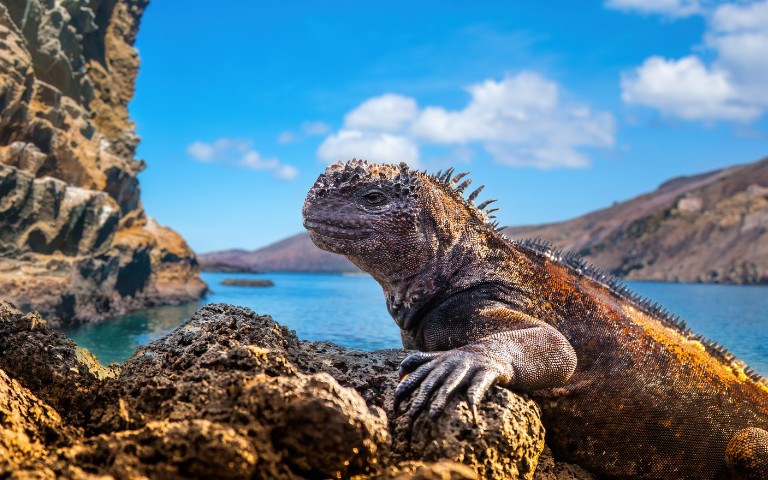
The Galápagos marine iguana is the world’s only sea foraging lizard, and watching them dive beneath the waves is a highlight for many visitors. Covered in dark, volcanic tones with a dragon-like silhouette, these salt spitting reptiles bask on black lava rocks to warm themselves before gliding gracefully underwater to graze on algae.
You’ll often spot them on Isabela, Fernandina and Española, where they blend effortlessly into the landscape. During guided visits, it’s easy to observe their natural habits while learning how they’ve adapted so perfectly to their environment. Their blunt snouts, long claws and flattened tails are extraordinary adaptations that allow them to manoeuvre through powerful currents with surprising grace.

Galápagos penguins
Seeing a penguin in a warm, equatorial climate is a surprise in itself, but the Galápagos penguin is full of quirks that make every sighting delightful. One of the smallest and rarest penguin species in the world, they’re often spotted darting along the rocky shores of Isabela Island and Fernandina, where volcanic backdrops create extraordinary photo opportunities.
Their playful nature makes them a delight to watch, whether they’re zipping through shallow water channels or perched on lava rocks to cool down between foraging sessions. A favourite among travellers, small-group touring offers the best chance to observe their behaviour without disturbing their fragile habitats.

Ready to explore deeper?
Discover the world’s most remarkable destinations with guided touring.
Life above water
While the Galápagos Islands are famous for their marine life, there’s just as much to see above the surface. The islands are home to a large number of endemic species, from reptiles that regulate body temperature on dark volcanic rocks to birds that have evolved remarkable traits shaped by their environment. Meet the iconic land animals of the Galápagos Islands:
Galápagos Tortoise
No creature represents the Galápagos quite like the giant tortoise. Often weighing more than two hundred kilograms and living well over 100 years, these gentle giants are among the longest-lived vertebrates on Earth. You’ll see both domed and saddleback shells rising from the grass like ancient boulders as you explore the lush highlands of Santa Cruz or the sweeping volcanic slopes of Isabela Island.
Their immense size and calm temperament make every sighting feel special, while their role in shaping scientific understanding of evolution adds meaning to the experience. From warming their body temperature in the early morning sun to wallowing in mud pools during the heat of the day, their slow pace and monumental presence make the Galápagos giant tortoise unforgettable.

Darwin Galápagos finches
Scattered throughout the Galápagos archipelago, Darwin’s finches are small birds with an enormous scientific legacy. Their varying beak shapes played a key role in Charles Darwin’s theory of evolution by natural selection, and today they remain one of the Galápagos’ most fascinating species.
While their appearance is subtle, watching them flit through highland forests or coastal shrubs offers a glimpse into the ecological diversity that defines the islands. Travellers usually encounter several finch species on guided walks, and Touring Experts help identify key features that might otherwise go unnoticed.

Land iguanas and other endemic reptiles
With golden scales and imposing, prehistoric forms, land iguanas are some of the most charismatic reptiles in the Galápagos Islands. You’ll often find them sprawled beneath prickly pear trees, waiting for cactus pads to fall. These reptiles rely on the sun to regulate body temperature, warming themselves on black volcanic rock in the early morning before retreating to shady hollows during the hottest part of the day.
Land iguanas share the islands with vibrant lava lizards and several other endemic reptiles, all shaped by the unique volcanic terrain. Watching them in the wild is a reminder of just how untouched the Galápagos Islands feel, where nature operates on its own timeline, uninterrupted.

Tips for a meaningful wildlife experience
Tips for a meaningful wildlife experience
Exploring the Galápagos Islands is a privilege, and the best experiences come from slowing down, respecting wildlife and letting nature unfold at its own pace. The islands operate under strict conservation rules designed to protect rare species and fragile ecosystems. Staying on marked paths, keeping a respectful distance and following your guide’s instructions ensures each encounter remains safe for both you and the animals.
Visiting the Charles Darwin Research Station on Santa Cruz offers a deeper look into the long-term conservation programs shaping the future of the Galapagos Islands. Travelling with Touring Experts further enriches the journey, as their deep knowledge provides valuable insights into behavioural patterns, migration routes and environmental challenges facing the region. By exploring thoughtfully, you’ll help preserve this extraordinary destination for generations to come while enjoying authentic adventures you’re unlikely to forget.

Plan your Galápagos Adventure with My Cruises Touring Collection
The Galapagos Islands offer a rare chance to experience wildlife in a way that feels personal and unhurried. From giant tortoises wandering misty highlands to penguins diving through shallow water and sharks patrolling rocky reefs, each encounter reveals another chapter of a destination shaped over millions of years.
If you’re ready to uncover the extraordinary world of Galápagos Islands animals, now’s the perfect time to begin planning an unforgettable touring holiday. Browse our Galápagos tours today.
Share to
Facebook
X
LinkedIn
Email